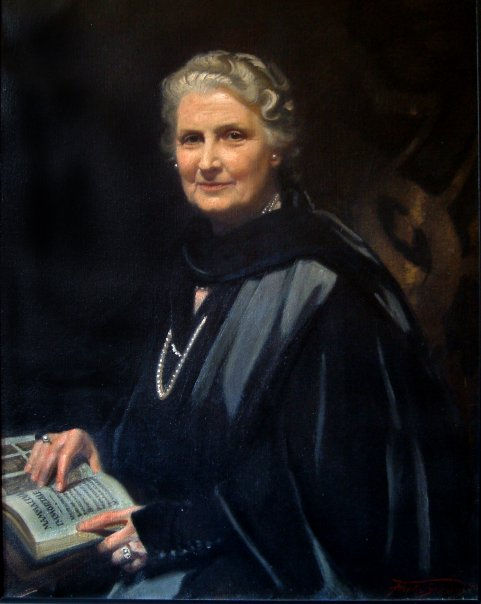
Maria Montessori
The advent of World War 2 inspired Maria to add the peace curriculum to the fundamental values of Montessori education. As the war progressed and hostilities between Italy and Great Britain broke out, Maria came into conflict with the fascist Italian government of the time. In 1931 Maria refused the order from Benito Mussolini for all Montessori teachers to take the fascist loyalty oath. Infuriated by her refusal to endorse his regime through her work, Mussolini ordered the closing of all Montessori schools in Italy.
Fearing for her life, Maria and her son fled to India to escape the regime. Her work didn't end with her exile though, she continued to advocate, teach, and opened more Montessori schools. She spent the remainder of the war in India.
After the war ended she returned to Europe where she spent her final years in Amsterdam. She died peacefully in 1952 at the age of 81, having achieved lasting change and a legacy that we still celebrate today.


The children spent their days working with puzzles, learning to prepare meals, self-help skills and manipulating special learning materials Maria had designed. She observed how the children absorbed knowledge from their surroundings, and the thoughtfully designed materials and learning opportunities offered to them. While these are considered basic tenants of modern childcare, that is thanks to Maria's observations at this early time in formalized childcare.
She began designing an even larger variety of materials with the help of her previous experiences and scientific education. These materials were designed to educate, inspire and foster the children's innate desire to learn and allowed them to choose their own materials and progress their learning at their own pace.


The Montessori Method began to attract the attention of prominant educators of the day, journalists, and politicians. The Method spread and by 1911, Montessori schools could be found throughout Europe and had spread as far as the United States.
Maria dedicated herself to child-led education and activism, giving up her medical practice entirely. She wrote books, lectured on her method and developed a program to prepare more Montessori teachers. Through her efforts and those of her followers, Montessori education spread across the world.
The Montessori method became so renowned, that she opened a teacher's training college. Montessori schools spread throughout Italy as the demand for this revolutionary approach to early childhood education grew.
Born in 1870, Maria Montessori was an educator, innovator and one of the first female Italian physicians. She championed the rights of women and children and her early studies in psychiatry led her to call into question the prevailing methods of teaching children with intellectual and developmental disabilities. When appointed the co-director of a new training institute for special education, she had the chance to start developing her method by experimenting with new ways of teaching children. Due to her tactile and hands-on methods of teaching language, many of the children in the program made unexpected gains and were able to pass Italy's 6th grade Standard exams, a feat considered impossible for these children at the time.
Due to her previous success in teaching special needs children, she was appointed to open her first Montessori School, called the Casa dei Bambini or Children's House in an impoverished area of Rome in 1907. The children who attended her school were the children of working parents who were living in poor conditions with little opportunity. The children were unaccustomed to an organized learning environment at first, but soon began to show great interest in learning.

